
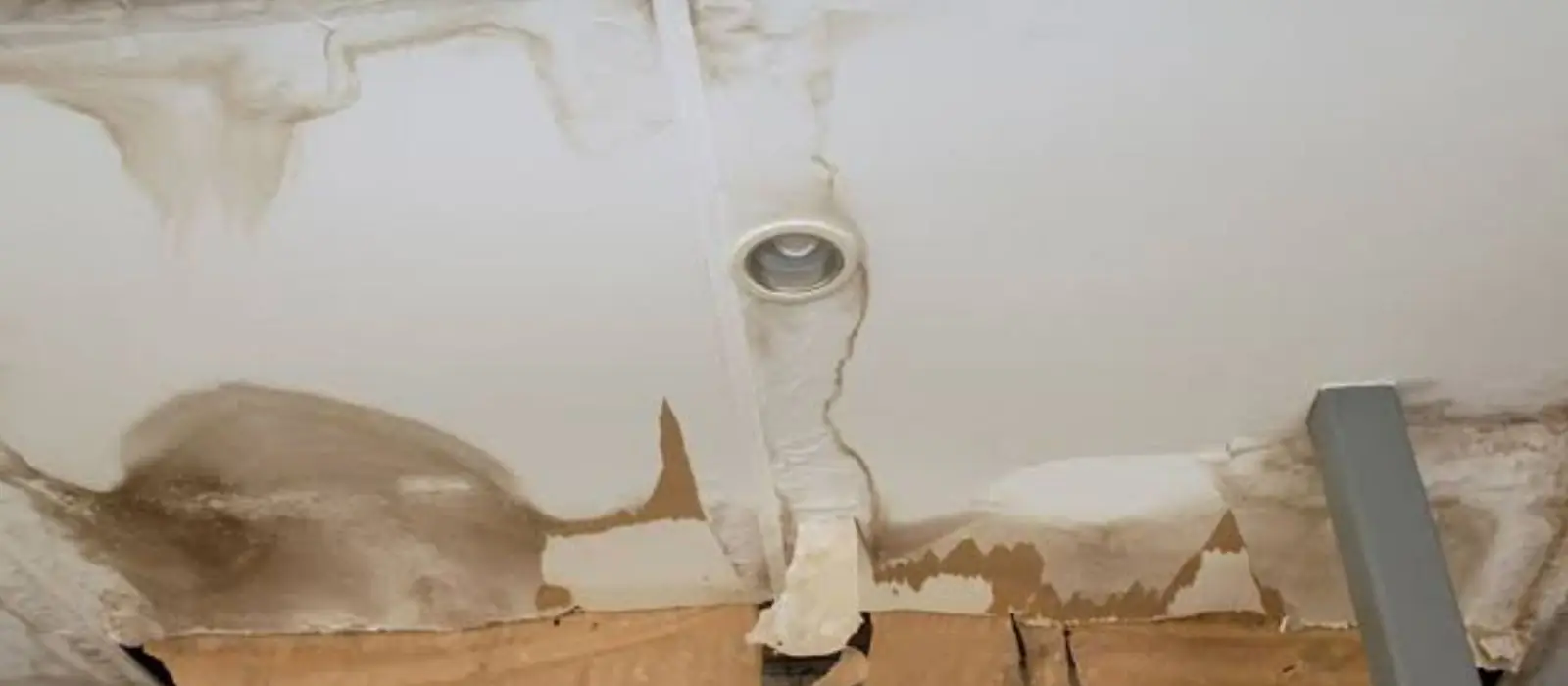
Dark spots on a ceiling are a symptom, not the problem. The problem is moisture that reached the ceiling from above or from the room. Mold grows where moisture lingers, so finding the source matters more than cleaning the spots.
This guide covers what ceiling mold usually points to, what to do first and what to avoid. It does not diagnose any health question. Questions about how mold affects a person belong to a physician.
Color does not identify the mold
Black, green, gray and brown growth can all look alike from the floor. Color does not tell you the type, and a name like black mold should not change the plan. The plan depends on the area, the material and the moisture.
A small spot on a painted ceiling with a known cause, such as a steamy bathroom, may be a surface problem. A spreading patch with a musty smell, or a spot beside a stain or sag, points to wet drywall or insulation above.
Where the moisture usually comes from
Bathroom or kitchen above
A leaking tub drain, supply line or toilet seal drips into the ceiling below.
Roof or flashing leaks
Rain finds a gap and runs along framing before it shows on a ceiling.
Condensation
Warm moist air meets a cold surface in a bathroom without good ventilation.
Air conditioning lines
A clogged condensate line or a leaking duct sweats into the ceiling cavity.
What to do first
- Find and stop the water if you can. Close the supply valve for the fixture above.
- Photograph the ceiling with a ruler or a coin for scale.
- Leave the ceiling alone. Scrubbing or poking can release spores into the room.
- Run bathroom fans and keep doors closed if mold is suspected.
- Call the 24/7 line and describe the location and the source above.
What to avoid
Do not paint over it. Paint hides the sign and leaves the moisture and the growth in place. Do not bleach drywall, because bleach adds moisture and does not remove the growth below the surface.
Do not tear out the ceiling without containment. Demolition without barriers and air control can move spores through the house. The crew sets barriers first.
How a crew handles ceiling mold
- 1
Trace the water
Moisture meters and a thermal camera confirm the source and the extent.
- 2
Contain
Plastic barriers and negative air protect the rest of the home.
- 3
Remove
Affected drywall and insulation are removed and surfaces HEPA vacuumed and cleaned.
- 4
Dry and verify
The area is dried and checked, and clearance testing is available.
The work follows ANSI/IICRC S520, the published standard for mold remediation. Ask any company whether its crews work to it. The rebuild follows drying, covered under water damage repair.
When a simple clean is enough
| What you see | What it suggests | Usual next step |
|---|---|---|
| A few small spots in a steamy bathroom | Surface moisture | Fix ventilation, clean, watch for return |
| Spots beside a brown stain | Wet drywall or a leak above | Find the leak, then remediate |
| A sagging or soft area | Saturated drywall or insulation | Call now, do not touch |
| A musty smell and no visible spots | Hidden moisture | Moisture mapping, then testing |
Seeing spots on your ceiling?
Call the 24/7 line and describe the room, the stain and what is above.
If the ceiling is in a rented unit
Tell your landlord or building manager in writing, and attach photos with dates. The source of a ceiling leak is often the unit above or the roof, and the manager usually coordinates that repair. Keep copies of every message.
While you wait, keep the room ventilated if you can and do not disturb the ceiling. If moisture reached your belongings, lift them away from the wall. Water mitigation covers how a crew dries a ceiling cavity once the source is fixed.
Renters in Venice and Pacific Palisades face the same steps, and the 24/7 line covers both areas if the damage needs a crew.
Santa Monica local note: storms and ceilings
A heavy storm in January 2005 closed the California Incline because of mudslide and flood risk and briefly flooded the McClure Tunnel, according to the Santa Monica Daily Press. Storms that size are a reminder that roofs and flashing take the first hit.
After any storm, walk through the home and look up. A new ceiling stain a few days after rain usually means water is still traveling through the roof structure. Dry weather does not mean the problem has gone.
Near the coast, wind-driven rain pushes into gaps that normal rain misses. Ocean Park and the area around the Santa Monica Pier are exposed to ocean weather, so check window seals and roof edges before the next storm.
Questions homeowners ask
No. Dust, soot and stains can look the same. A test or an inspection answers the question. If the spot returns after cleaning, or comes with a smell or a stain, the cause is likely moisture.
A tiny surface spot with a known cause may be cleaned carefully. Anything spreading, anything on drywall that feels soft and anything with an unknown source needs an assessment first.
Tell your building manager at once and document the damage with photos. The manager or the owner usually handles repairs to the source. The line can address the mold and the water on your side.
It depends on the cause. Mold from a sudden and accidental water loss may be covered in part. Mold from neglect or a slow leak often is not. Check your policy or ask your insurer.