
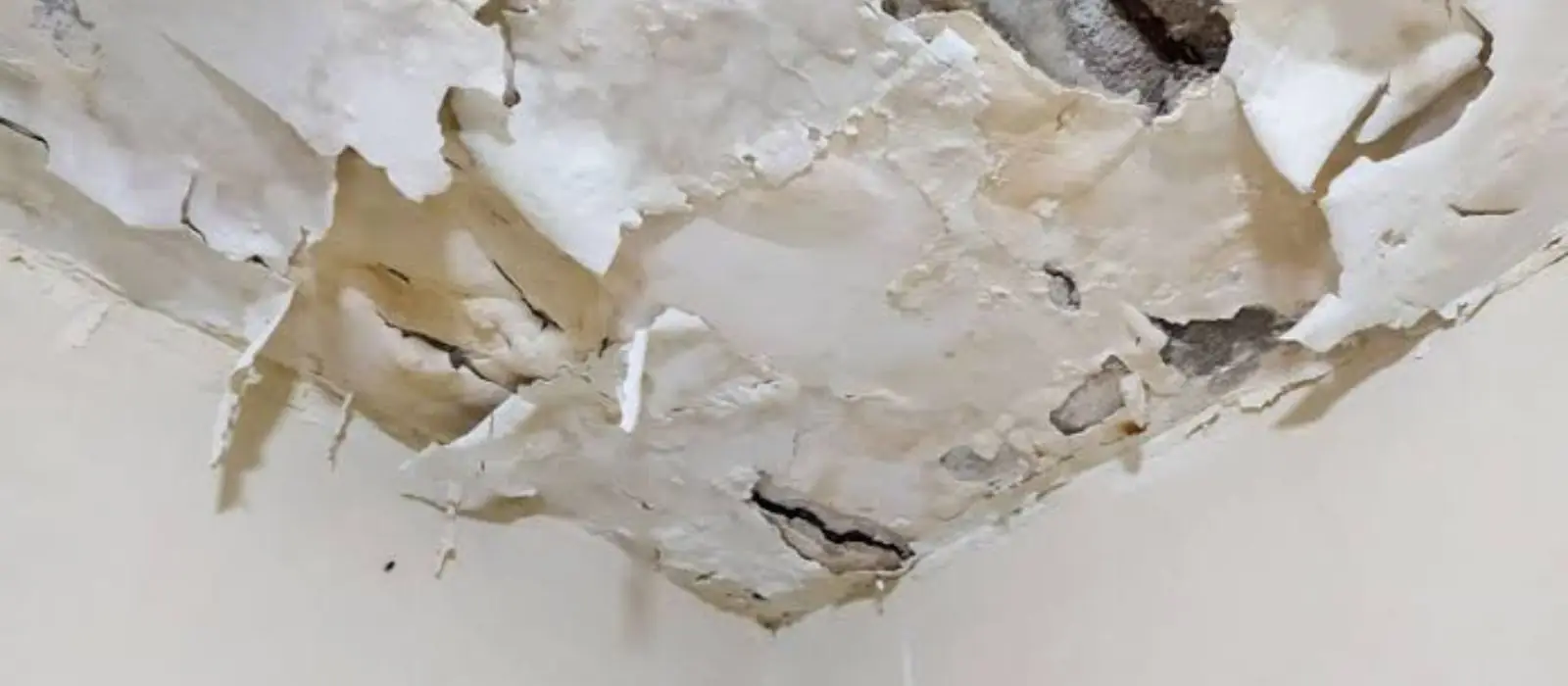
A small patch of mold on a painted ceiling can be cleaned by a careful homeowner. A larger or deeper patch cannot, and trying risks spreading it. The skill is knowing which one you have.
This guide sets out the steps for a small, surface-level patch, the size line that separates a home job from a crew job and the signs that the drywall has to come out. Fixing the moisture comes before any of it.
Check the size first
The U.S. Environmental Protection Agency says that if a moldy area is less than about 10 square feet, a homeowner can usually handle the cleanup. A square patch about 3 feet on each side is roughly that size. Anything bigger calls for a different approach.
Size is only one test. A patch on drywall that feels soft, sags or sits beside a stain has probably grown into the material. A smaller patch with those signs still needs a professional assessment.
Fix the moisture before you clean
Cleaning a ceiling that is still getting wet is wasted effort. Trace the source above, fix it and let the material dry. The EPA notes that water-damaged areas should be dried within 24 to 48 hours to prevent mold growth, and drying later makes growth more likely.
If the source is a bathroom above, a plumber or the building manager has to fix it. If it is a roof leak, a roofer does. A restoration crew handles the damage that is left behind, starting with water mitigation when materials are wet.
What you need for a small patch
- An N-95 respirator, goggles without ventilation holes and long gloves.
- Plastic sheeting and painter's tape to protect the floor and nearby furniture.
- Detergent and water, rags and a bucket.
- A HEPA vacuum if you have one, for dust after the surface dries.
- A fan set to exhaust out a window, so air leaves the room instead of spreading through the house.
Steps for a small surface patch
- 1
Prepare
Cover the floor, close the room door and set the fan to exhaust out a window.
- 2
Wipe
Clean the patch with detergent and water on a damp rag. Do not scrub hard or use a dry brush.
- 3
Dry
Let the surface dry fully, then check it again over the next few days.
- 4
Seal and paint
Use a stain-blocking primer and paint only after the area is dry and the source is fixed.
The EPA states that using bleach as a routine part of mold cleanup is not recommended, and that bleach must never be mixed with ammonia-based cleaners. Detergent and water is enough for most small surface patches.
Signs the drywall has to come out
| Sign | What it usually means | What to do |
|---|---|---|
| Soft, sagging or crumbling drywall | Saturated material | Stop. Call for assessment and removal |
| Spots that return within weeks | Moisture is still present | Find the source and call a crew |
| Patch larger than about 10 square feet | Beyond a home job | Call a crew with containment |
| Spots on both sides of the material | Growth has gone through | Remove the affected section |
| A musty smell with no clear source | Hidden moisture above | Moisture mapping before cleanup |
When the drywall has to be removed, a crew uses barriers and negative air to keep spores out of clean rooms. The rebuild follows drying and is covered under water damage repair.
Ceiling patch bigger than you thought?
Call the 24/7 line. Dispatch explains scope and price before work starts.
Santa Monica local note: small single-story homes
Sunset Park, next to Santa Monica Airport, has small single-story homes built in the 1940s for aircraft workers. In a small house, a roof leak or a bathroom supply failure can reach most ceilings quickly, so look at every room after a leak.
Homes of that age can still have original roofing layers and plumbing. If a ceiling patch appears in a house that old, ask a roofer and a plumber to check the likely sources before you paint.
If you live near the coast in Venice or Pacific Palisades, the same size line and cleanup steps apply. Ask the building manager if you rent, because they may be responsible for the source.
Questions homeowners ask
The EPA says about 10 square feet or less is usually a home job. Bigger areas, soft drywall or a patch that keeps returning need a professional assessment.
The EPA lists an N-95 respirator, goggles and gloves as protective equipment for cleanup. Ventilate the room by exhausting air out a window rather than through the house.
Not on its own. Paint over mold and moisture hides the problem and does not stop it. Fix the source, clean or remove the growth and then prime and paint a dry surface.
Yes. Tell your landlord or building manager in writing and keep photos. They usually handle the source of a leak from the unit above or from the roof.