
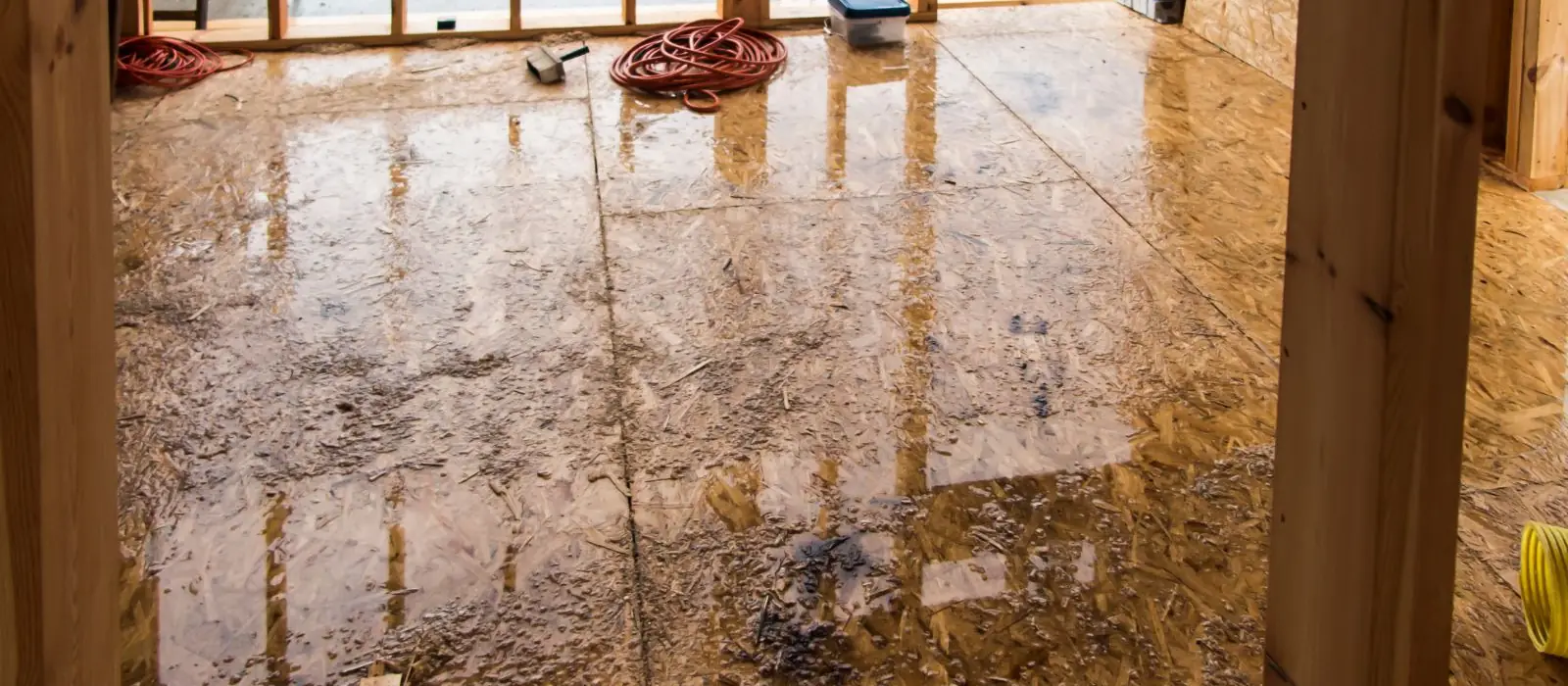
Repair choices for a water-damaged hardwood floor depend on one thing above all: whether the floor was dried properly first. A floor repaired over damp boards or a wet subfloor will cup again.
This guide assumes the floor has been dried and read dry. It compares the usual repair options, explains how new boards are blended and covers what renters and building managers should do. A separate guide covers the first day and the drying itself.
Confirm the floor is dry
Readings from a moisture meter on the boards and the subfloor decide when repair begins. A floor that feels dry can still hold moisture. Ask for readings and compare them to an unaffected area of the same wood.
Wait times vary. Many floors need some time after drying to settle before sanding gives a stable result. The crew tells you when your floor is ready, and the order matters. See water mitigation for how drying is confirmed.
Four repair options
| Option | When it fits | Trade-off |
|---|---|---|
| Sand and refinish | Mild cupping that has eased, surface staining | Cheapest path, depends on enough wood above the nails |
| Replace individual boards | A few damaged boards in an otherwise sound floor | New boards may differ in color until the room is refinished |
| Replace a section | Damage covers a defined area | The seam between old and new must be blended |
| Replace the floor in the room | Widespread buckling, loose boards or contamination | Highest cost and most disruption |
None of these is a promise. The crew reads the boards, the subfloor and the fasteners before recommending one. Ask for the reasoning in writing.
How new boards blend with old
New wood seldom matches old wood exactly because aged boards darken. The usual way to hide the difference is to sand and refinish the whole room, or at least to a natural break such as a doorway. Spot repair with stain can leave a visible patch.
Species, width, direction and finish all need to match. Salvaged boards from a closet or hidden area can supply a closer color match than new stock.
What to ask before work starts
- Were the boards and subfloor read dry before repair?
- Is the whole room being refinished or only the repair?
- Who is responsible for the repair if the floor cups again?
- Is a permit needed, and who pulls it?
- What is the written scope, including finishing and furniture moving?
If you rent or share a building
If the water came from a neighbor, a shared line or the roof, tell your landlord or building manager in writing and keep photos. They usually coordinate repairs to the structure and the source. Your own renter policy typically covers your belongings.
In a multi-unit building, ask who is responsible for the floor finish, because that varies by lease and ownership. See flood damage restoration if the water came from outside the unit.
Ready to scope the floor?
Call the 24/7 line. Scope and price are explained before work starts.
What the repair timeline looks like
- The floor is dried and moisture readings are confirmed.
- The boards settle while moisture levels stabilize.
- Damaged boards are replaced or sections rebuilt.
- The floor is sanded flat, and edges and corners are finished by hand.
- Stain and sealer are applied in coats with drying time between them.
- The floor cures before furniture and rugs return.
Ask the contractor how long each stage takes for your floor and which stages overlap. Finishing before the floor settles is a common cause of repeat problems.
Ask whether the contractor will match the existing stain on a test board first. A small sample in a closet corner costs little and avoids a floor that looks patched once the light changes.
Venice local note: shared buildings
Early 1900s multifamily buildings line Pacific Avenue in Venice, some with as many as 30 units on one lot, according to published descriptions of the neighborhood. A leak in one unit can reach several floors below.
If you live on a lower floor in a shared building, tell the manager right away and ask neighbors to check their ceilings. Wood floors on the lower units take the water that came from above, and the cause can be a shared line rather than your own plumbing.
See the Venice page for coverage on the walk streets and along Pacific Avenue. For hillside and canyon homes, see Pacific Palisades.
Questions homeowners ask
Often, but not always. Refinishing works when boards are sound and have enough wood left to sand. A floor with widespread damage can cost more to repair than to replace.
Close, not perfect. Whole-room refinishing is the usual way to blend them. Salvaged boards from a hidden area can help match color.
If the damage came from a sudden and accidental loss, a policy may cover part or all of it. Slow leaks often are excluded. Check your policy or ask your insurer.
Yes. In multi-unit buildings, the source of the water, the building owner and the lease decide who repairs what. Tell the manager early and keep written records.