
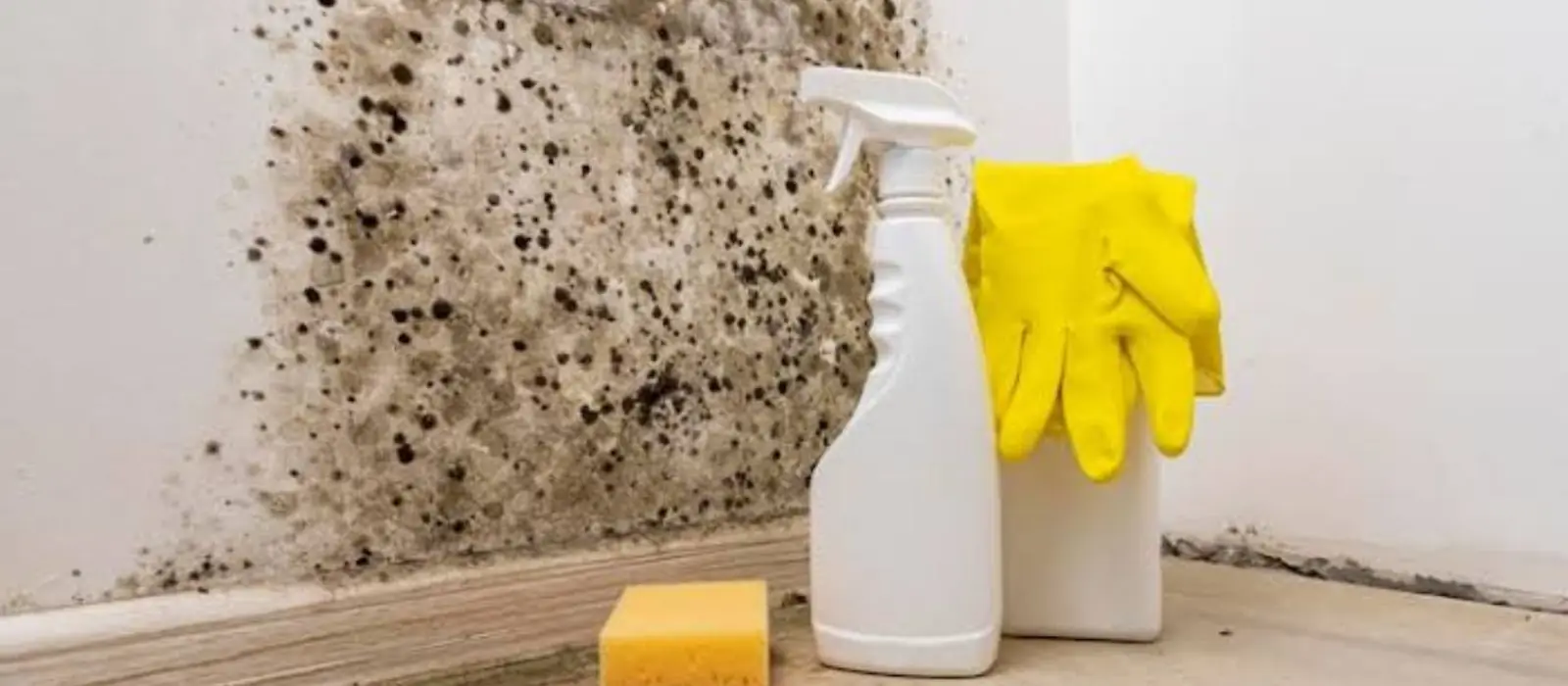
Getting rid of mold means getting rid of the moisture that feeds it. Cleaning alone is a pause, and the growth returns wherever the damp remains.
This is a whole-home overview that ties together the rest of the mold guides on this site. It covers moisture control, safe cleaning, removal and a seasonal habit that catches problems early.
Step one: control the moisture
The EPA states that the key to mold control is moisture control. Fix leaks, run bathroom and kitchen fans, vent dryers outdoors, keep humidity down and dry anything that gets wet within 24 to 48 hours.
Look at the places moisture hides: under sinks, behind toilets, around windows, in closets on exterior walls and near air conditioning units. Check them regularly. A moisture meter or a hygrometer makes the check objective.
Step two: clean what is safe to clean
Small surface growth on hard materials can be cleaned with detergent and water. The EPA says an area of less than about 10 square feet can usually be handled by the homeowner. Wear gloves, goggles and an N-95 respirator.
The EPA does not recommend bleach as a routine part of mold cleanup, and warns against mixing bleach with ammonia-based cleaners. Dry the area fully afterward.
Step three: remove what cannot be cleaned
| Material | Usually | Why |
|---|---|---|
| Tile, glass, sealed surfaces | Clean | Growth sits on the surface |
| Solid wood | Clean or sand if superficial | Depends on depth |
| Drywall | Remove affected sections | Porous, growth goes inside |
| Carpet and pad | Remove | Hard to clean and hard to dry |
| Insulation | Remove | Holds moisture |
Larger areas, growth on drywall and anything with a stubborn smell need containment and a crew. See mold remediation for the process.
Step four: dry and rebuild
Dry the area and confirm it with meter readings before any new material goes up. A rebuild over damp framing sets the problem up for a repeat. See water damage repair for how the rebuild is scoped.
A seasonal check
- After a wet winter, check closets, lower levels and exterior walls.
- After a heat wave, check air conditioning lines and condensate drains.
- Before the rainy season, check roofs, flashing and window seals.
- Once a year, check under every sink and behind every toilet.
Found more than you expected?
Call the 24/7 line. Scope and price are explained before work starts.
Bathrooms, kitchens and laundry areas
These three rooms produce the most moisture in a home. Run the bathroom fan during a shower and for a while after. Wipe down shower walls and fix failing caulk. In the kitchen, check under the sink and behind the dishwasher. In laundry areas, check the washer hoses and the dryer vent.
A dripping fixture or a loose hose can feed growth for weeks before anyone notices. Replace old braided hoses on a schedule and keep a small tray or sensor where a leak would first show.
If you rent
Tell the manager in writing and attach photos. The manager usually handles the source of moisture and repairs to the building. Keep your own belongings dry and off the floor, and do not demolish walls yourself. If the problem keeps returning, read about water mitigation to see how a crew dries a structure fully.
Keep indoor humidity steady and watch windows for condensation in the morning. Persistent fogging on glass is a simple sign that a room holds more moisture than its ventilation can remove.
If a spot returns after cleaning, treat that as a sign the moisture source is still active and look for it before cleaning again.
Small, dry, hard surfaces are the only places where a household cleanup makes sense, and everything else deserves a closer look.
Santa Monica local note: after a wet season
During the heavy storms of January 2005, rainfall in Los Angeles passed 22 inches for the season, more than seven inches above its average, according to the Santa Monica Daily Press. A wet winter like that leaves roofs, walls and lower levels damp well into spring.
After a wet season, check closets on exterior walls, bathrooms and any lower-level rooms. A new musty smell weeks after the rain is a sign that something stayed wet. Fixing it early is cheaper and easier than waiting.
The same checks apply in Venice and Pacific Palisades, where coastal air and hillsides make a seasonal walk-through a useful habit.
Questions homeowners ask
You can remove growth and fix the moisture, which prevents it. Mold spores are always present at low levels, so the goal is to keep conditions dry.
A HEPA air purifier can help capture airborne particles during and after cleanup. It does not remove growth or fix moisture.
Call when the area is larger than about 10 square feet, when drywall or insulation is involved, when the smell returns or when you need written proof.
Any building with a moisture problem can have it. If you rent, tell the manager in writing and keep photos. The manager usually handles the source of the moisture.