
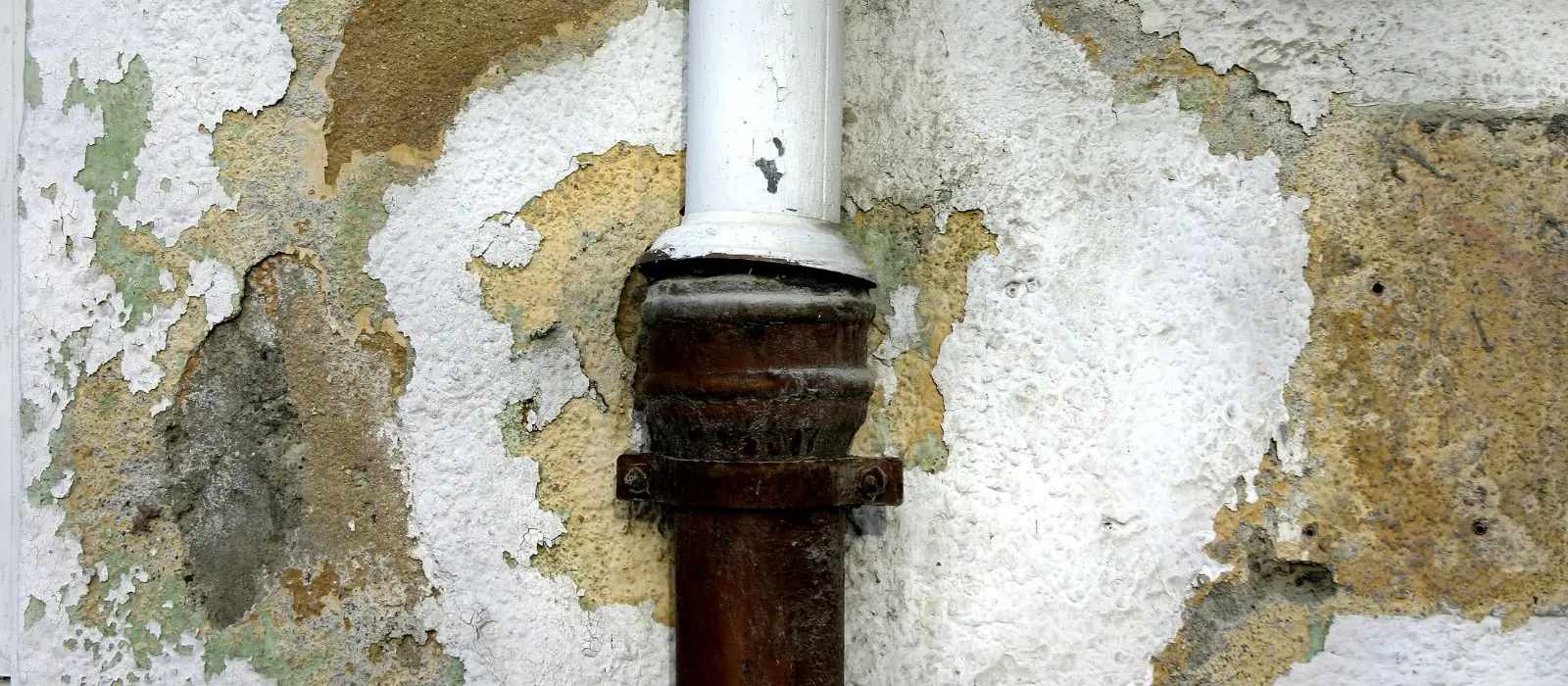
Water damage is easy to miss until it is large. Many of the first signs are small and easy to blame on something else: a faint stain, a musty smell, a floor that feels slightly soft.
This guide lists what water damage looks like in each part of a home, what you can feel or smell and how to spot moisture that is hidden. If you see several of these together, call.
On ceilings and walls
Brown or yellow stains
Rings or patches that spread outward from a center show repeated or continuing moisture.
Bubbling or peeling paint
Paint lifts when moisture pushes from behind.
Sagging drywall
A ceiling that droops or a wall that bulges has absorbed water.
Cracks and swelling at seams
Drywall tape and joints open when the board swells.
On floors and cabinets
Cupped or buckled boards
Wood floors lift at the edges or the center when they absorb moisture.
Warped laminate or vinyl
Seams open and planks curl at the edges.
Stained or swollen baseboards
Baseboards are often the first thing water wicks into.
Swollen cabinet toe kicks
Water collects under sinks and dishwashers and swells the lowest panel.
What you can feel and smell
A wall that feels cool or damp to the hand may hold moisture. A floor that feels spongy underfoot may have a wet subfloor. A musty or earthy smell, especially in a closet or bathroom, often points to materials that stayed wet.
Condensation on windows and cold walls is a related sign. It is not always damage, but it can show a humidity problem that leads to damage.
Hidden signs
- A water bill that rises with no change in use.
- The sound of running water when everything is off.
- A water meter that moves when all fixtures are closed.
- Warm spots on a floor that may point to a hot water line.
- Wallpaper or paint that lifts in a small area.
A moisture meter and a thermal camera find what the eye cannot. Hidden moisture is one reason a crew checks beyond the stain.
Is it water damage or something else
| What you see | Might be | How to tell |
|---|---|---|
| Brown ring on a ceiling | Old or active leak | A damp or soft center suggests active moisture |
| Dark spots on a ceiling | Mold, dust or soot | Spots with a musty smell and a stain suggest moisture |
| White crust on concrete | Mineral deposits from moisture | It returns after wiping, so find the source |
| Cupped wood floor | Water under the floor | Check below, beside the dishwasher and near walls |
When in doubt, take photos and call. A call costs nothing, and early action keeps damage smaller. See water damage cleanup for what happens once materials are wet.
Seen enough signs?
Call the 24/7 line and describe what you see.
A five-minute walk-through for any home
Once a month, walk each room with a flashlight and look at the same places. Check ceilings under bathrooms, the walls around windows, the base of walls near exterior doors and the cabinets under every sink. Press gently on suspicious spots to feel for softness.
Look at the water meter if you can reach it, with every fixture off, and note whether it moves. In a rental, take dated photos of anything unusual and send them to the manager. Early notes make repairs and claims easier to sort out.
If you find damage, the next step depends on what is wet. See water damage repair for how rebuilding is scoped once the area is dry.
Write down the date you first noticed a stain and take a photo each week. Whether a mark is growing or stable is useful information for a crew and for an insurer.
Santa Monica local note: coastal exposure
Ocean Park, in the southwest corner of the city, and the area around the Santa Monica Pier sit close to the ocean. Wind-driven rain and salt air test window seals and roof edges more than inland streets do.
Walk the outside of the building after a storm. Look at window frames, roof edges and flashing, and look up inside at ceilings and the tops of walls. A stain that appears a few days after rain often traces to the exterior.
If you are in Venice or Pacific Palisades, the same signs apply, and the coastal exposure is similar along the beach.
Questions homeowners ask
Often a faint stain, a musty smell or paint that lifts slightly. These look minor but show moisture is present. Early calls keep damage smaller.
Yes. Wall cavities hold moisture that surface checks miss. A moisture meter or thermal camera shows whether a cavity is wet.
The EPA advises drying water-damaged areas within 24 to 48 hours to prevent mold growth. Past that window, growth becomes more likely.
The signs are the same. In apartments, the source is often a neighbor above or a shared line, so tell the manager and check ceilings and walls shared with other units.